
Solar Panels for Your Home
Turn unused roof or land space into a source of electricity for your home. GS Solar designs and installs solar PV systems across West Sussex and Hampshire, with straightforward advice from initial assessment through to certification and sign-off.
What do solar panels actually do?
Solar photovoltaic (PV) panels convert daylight into electricity. Your home uses the electricity being generated first. If you generate more than you need at that moment, the surplus can be stored in a compatible battery or exported to the grid, depending on your system and tariff.
The main benefits
- Reduce the amount of electricity you buy from the grid.
- Generate renewable electricity at your own property.
- Pair solar with battery storage to use more generation later.
- Potentially receive payment for eligible electricity exported to the grid.
- Choose a system designed for your actual property rather than a generic package.
Is my home suitable?
Suitability depends on more than simply whether your roof faces south. We consider available roof or ground area, orientation, pitch, shading, roof condition, structural suitability and your electricity usage. A site survey lets us assess the practical options properly.
Roof direction
An unshaded south-facing roof is ideal for maximum annual generation. East- and west-facing roofs can also work well. Energy Saving Trust notes that east- or west-facing systems tend to generate around 15-20% less energy than an equivalent directly south-facing system. North-facing roofs are generally less attractive, so we would look at the wider property for alternatives where appropriate.
Space
As a useful benchmark, Energy Saving Trust says an average 4.5kWp domestic system typically uses around 12 panels and approximately 20-30m² of roof area. Your system may be smaller or larger depending on the property and design.
Shade
Trees, chimneys and neighbouring buildings can reduce output if they shade the panels. We assess shading as part of system design and can consider suitable technology where partial shading is unavoidable.
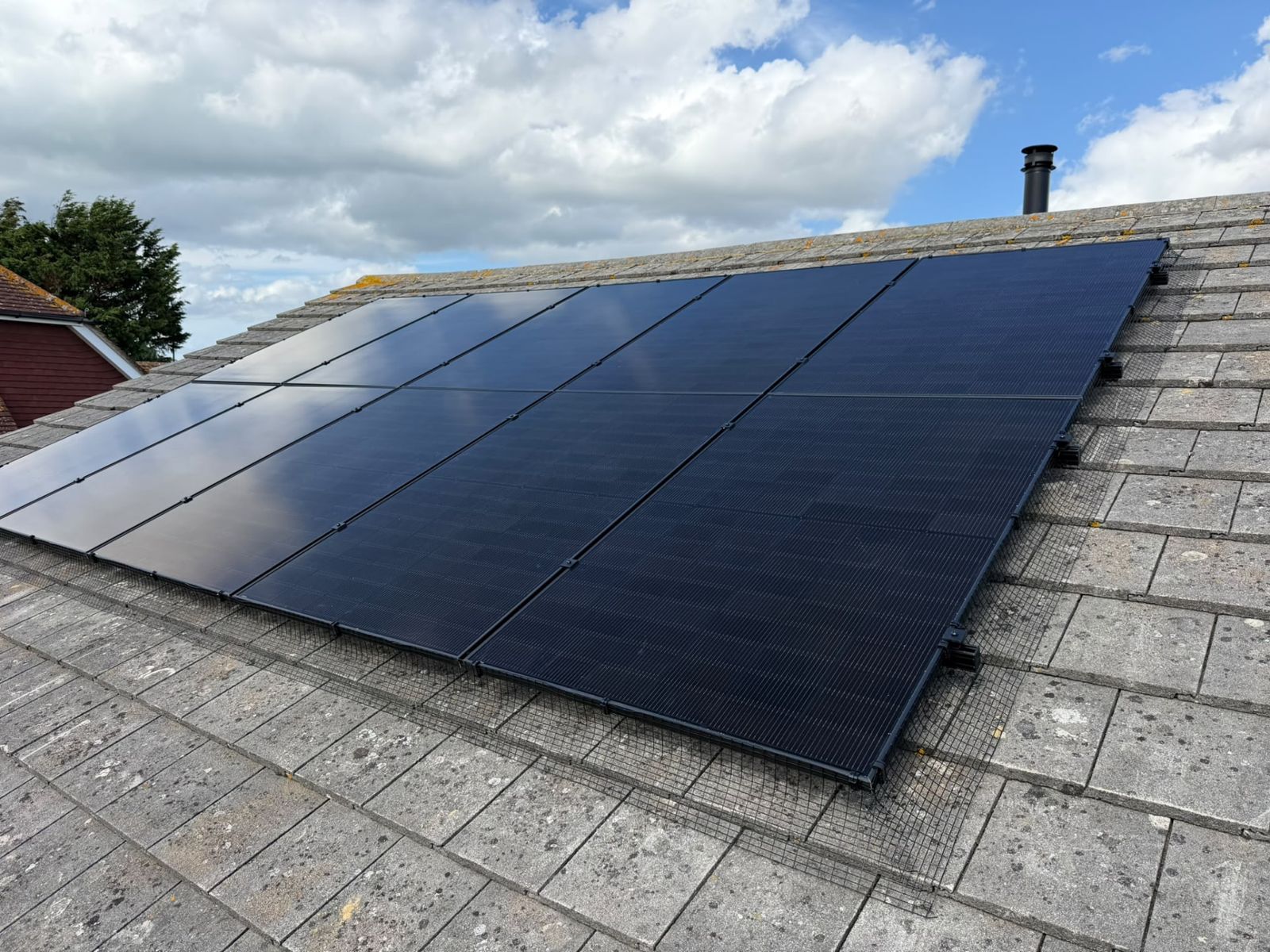
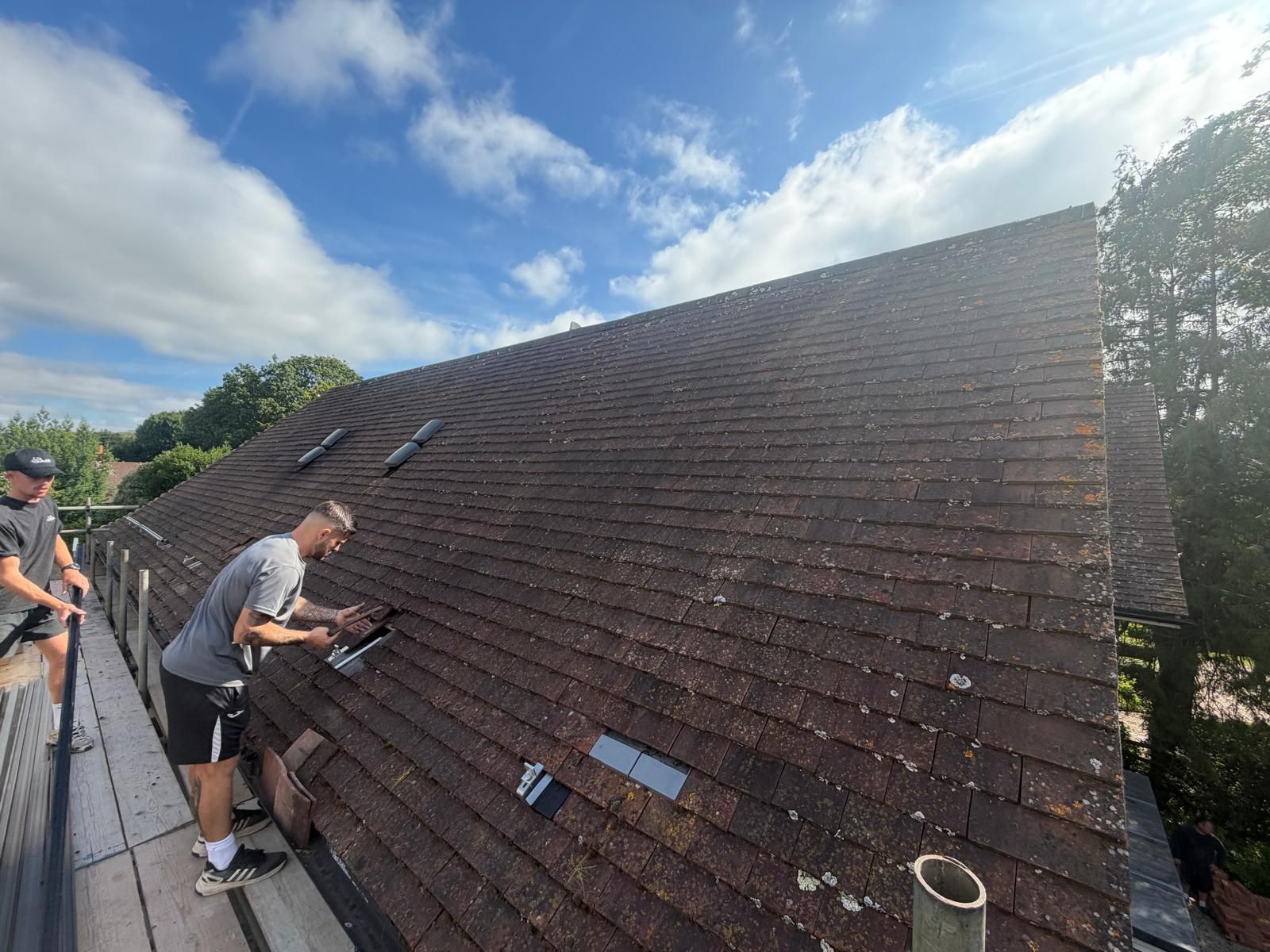
On-roof or in-roof?
On-roof systems sit above the existing roof covering on a mounting system. In-roof systems integrate the panels into the roof line, replacing part of the roof covering. In-roof solar can be particularly attractive when you are already replacing a roof, building an extension or working on a new build.
See all the places solar can be installed or read about battery storage.
What happens next?
Step 1
Send an enquiry
Tell us about the property and what you are considering.
Step 2
Assessment
We assess the property and arrange a site survey.
Step 3
Design & quote
We design a suitable system and provide a quote.
Step 4
Installation
Once agreed, the system is installed.
Step 5
Certification
We complete certification and sign-off and explain how to use and monitor the system.
Want to know whether your home is suitable?
Get a free, no-obligation quote from GS Solar.